BREA WATER HEATER COST GUIDE • 92821 & 92823
Water Heater Replacement Cost in Brea
There is no honest one-price answer for water heater replacement. The total cost depends on more than the heater itself. System type, capacity, fuel source, installation location, access, venting, electrical or gas changes, drainage, code work, removal of the old unit and whether you are replacing like-for-like or changing technologies can all change the scope.
: Replacement Cost Is Equipment + Installation + Property Conditions
A useful water-heater replacement estimate should separate the job into three parts:
- The equipment: storage tank, tankless, gas, electric, heat-pump or another system type; plus the capacity or output needed.
- The installation: labor, connections, removal, startup, testing and the work required to install the new unit correctly.
- The property conditions: access, existing plumbing, gas or electrical capacity, venting, drainage, condensate, location changes and any code or permit-related work required for the specific project.
Two homeowners can buy similar water heaters and still receive very different replacement scopes because the surrounding installation is different. That is why a product price by itself is not the same thing as a completed replacement price.
Lowest-Complexity Replacement
A similar system replaces the old one in the same location and the existing utilities, venting, drainage and connections are suitable.
Moderate-Complexity Replacement
The new system needs connection changes, capacity changes, access work or correction of installation conditions around the old equipment.
Highest-Complexity Replacement
The project changes technology, fuel, location, venting, electrical/gas demand, drainage or the overall hot-water system design.
What Is Included in a Water Heater Replacement Cost?
When people compare water-heater prices online, they often compare the cost of the appliance with the price of a complete installed project. Those are not the same thing. A replacement quote can include several layers of work.
Water Heater Equipment
The model, capacity, fuel type, efficiency level and system type form the equipment portion of the project.
Removal & Disposal
The old heater must be disconnected, removed from the property and handled appropriately.
Installation Labor
The new system has to be positioned, connected, started, tested and checked for correct operation.
Connection Changes
Water, gas, electrical, venting, condensate or drain connections may need modification when the new unit differs from the old setup.
Code / Permit Scope
Local requirements, inspection needs and corrections to an existing installation can affect the final project scope.
System Upgrades
A conversion, relocation, added capacity or supporting utility work can turn a simple replacement into a larger installation project.
1. The Type of Water Heater Changes the Replacement Scope
The biggest pricing mistake is treating every water heater as interchangeable. Storage tanks, tankless systems, gas units, electric units and heat-pump systems have different equipment and installation requirements.
A like-for-like storage-tank replacement may use much of the existing installation if it remains suitable. A tankless conversion may require different gas capacity, electrical power, venting, condensate handling or mounting. A heat-pump conversion can add space, airflow, electrical and drainage considerations.
The correct comparison is not simply “Which heater costs more?” It is “What complete system does this property need, and what changes are required to install it correctly?”
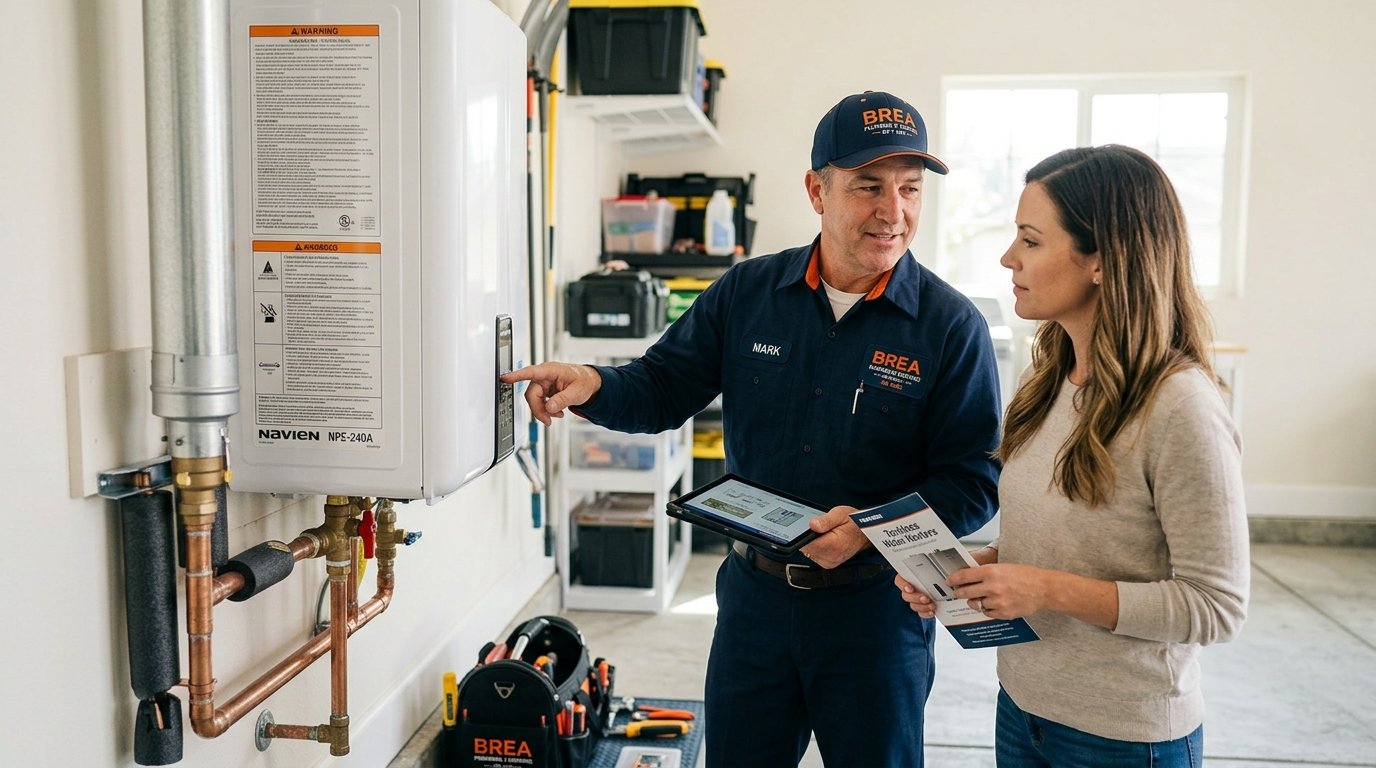
The Main Factors That Can Raise or Lower Water Heater Replacement Cost
Capacity & Output
Larger storage capacity, higher recovery needs or higher tankless flow requirements can change equipment choice and supporting infrastructure.
Gas vs Electric
Fuel type changes the installation path. Gas equipment can involve gas supply and venting; electric equipment depends on electrical capacity and controls.
Same Location vs Relocation
Keeping the heater in a suitable existing location is generally simpler than moving it and rerouting water, gas, electrical, venting or drainage.
Access to the Heater
Tight closets, interior locations, stairs, elevated spaces or difficult equipment paths can make removal and installation more involved.
Existing Installation Condition
Old valves, damaged connectors, unsuitable venting, corroded piping or other conditions around the heater can add work beyond the appliance itself.
Code / Inspection Requirements
Required corrections, permits and inspections can affect scope. The exact requirement should be confirmed for the specific property and project.
Venting
Gas and some tankless systems may need venting that matches the new equipment and installation location.
Electrical Capacity
Electric, tankless and heat-pump systems may require the existing electrical setup to be evaluated before installation.
Drainage & Condensate
Some installations need drainage, condensate handling or pan/drain planning based on the equipment and location.
Like-for-Like Replacement vs Conversion: Why the Difference Matters
A like-for-like replacement means the new system is broadly similar to the old system and stays in a suitable existing location. This usually keeps the project focused on removal, connections, equipment fit and any needed corrections around the existing installation.
A conversion changes the system in a meaningful way—such as storage tank to tankless, gas to electric, electric to heat pump, or a major capacity change. Conversions can be valuable, but the cost conversation must include the infrastructure needed to support the new system.
Like-for-Like
Best compared around condition, capacity, fit, connection changes and whether the existing installation remains suitable.
Tank to Tankless
Adds flow sizing, temperature rise, gas/electrical capacity, venting, condensate and mounting considerations.
Fuel / Technology Change
Can add utility changes, electrical or gas work, space/airflow requirements and a larger installation scope.
Useful rule: if a replacement quote looks much higher than an online appliance price, ask what installation changes are included. The difference may be legitimate—or it may reveal items that should be explained before you approve the work.
How Tankless Water Heater Replacement Cost Is Built
Tankless replacement cost depends on whether you already have a properly sized tankless system or you are converting from a storage tank. Replacing an existing tankless unit can still involve model compatibility, venting, gas/electrical requirements, condensate and service access. Converting from a tank adds a broader design question: can the property support the required flow and temperature rise?
For a tankless system, the equipment price is only one part of the decision. The project should also consider:
- Required flow at realistic simultaneous fixture use
- Temperature rise needed to deliver the desired hot-water temperature
- Gas supply or electrical capacity
- Venting requirements for the selected unit
- Condensate handling where applicable
- Recirculation needs if the property uses it
- Service valves and future maintenance access
Considering Tankless?
Compare tank and tankless around demand, space, utilities and maintenance before choosing.
Planning Installation?
A tankless installation should be sized around actual flow and infrastructure.
Existing Tankless Failing?
An error code or performance issue does not automatically mean replacement is required.
Gas, Electric and Heat-Pump Replacement: Different Cost Drivers
Gas Water Heater Replacement
Consider gas supply, burner/controls, venting, combustion-air conditions, installation location and whether the new unit matches the existing system.
Electric Water Heater Replacement
Consider electrical capacity, breaker/circuit conditions, heating requirements, tank size and whether a partial heating failure is being mistaken for an undersized system.
Heat-Pump Water Heater Replacement
Consider space, airflow, electrical requirements, drainage, storage capacity, backup heating and whether the installation environment suits the technology.
A fuel or technology change should solve a clear problem—capacity, efficiency goals, space, equipment condition or another property-specific need. Changing systems only because one option sounds newer can create unnecessary installation cost.
Can Repair Be Cheaper Than Replacement? Sometimes but Compare What Remains After the Repair
A lower repair price is not automatically the better financial decision, and a higher replacement price is not automatically wasteful. The meaningful comparison is what you get after each option.
Repair is often worth serious consideration when the storage vessel or core equipment is sound, the failure is isolated, the system still meets demand and the repair does not leave several other major concerns behind.
Replacement becomes stronger when the tank vessel itself is leaking, deterioration is broad, failures keep returning, the system no longer meets demand or the property needs a planned change that repair cannot solve.
- What exactly failed?
- Is the tank vessel or heat exchanger sound?
- How much useful life may remain in the rest of the system?
- Has the heater needed repeated unrelated repairs?
- Does the current system still meet hot-water demand?
- Would replacement fix a real capacity or installation problem?

How to Compare Water Heater Replacement Quotes Without Comparing the Wrong Things
Two quotes can look different because they include different scopes. Before choosing the lowest number, make sure both proposals are solving the same problem and include the same level of work.
Equipment
Is the system type, capacity and model class comparable? Is one quote for a different technology or output level?
Installation Scope
Does the quote include removal, connections, required modifications, startup and testing?
Infrastructure Work
Are gas, electrical, venting, drainage or relocation changes included or excluded?
Code / Permit Items
Does the proposal explain any required correction, permit or inspection work instead of hiding it in a vague total?
What Happens If Conditions Change?
Ask how unexpected installation conditions will be handled before work begins.
Warranty Information
Separate manufacturer equipment coverage from any labor or workmanship terms and ask what is actually included.
A good question to ask: “What is included in this price, what could change it, and what problem is this replacement designed to solve?” That single question often reveals more than comparing totals alone.
Common Replacement-Cost Mistakes That Can Make a Cheap Quote Expensive Later
Buying by Tank Size Alone
Capacity labels do not tell you whether recovery or tankless flow matches the property’s actual demand.
Ignoring the Existing Installation
A new heater installed into unsuitable venting, damaged connections or inadequate utilities can turn a simple replacement into repeated trouble.
Choosing Tankless Without Sizing
Tankless performance depends on flow and temperature rise, not simply on the word “tankless.”
Assuming Newer Means Better
A technology change should solve a real need. If the current system type fits the property, a like-for-like replacement may be more practical.
Comparing Appliance Price to Installed Price
The product price does not include the full replacement scope.
Replacing Before Diagnosing
Some no-hot-water or low-capacity complaints come from repairable components rather than a failed system.
How to Plan a Replacement Budget Without Guessing a Fake Number
If you are trying to budget before getting a site-specific quote, build the budget around the questions that change scope instead of starting with one generic national price.
- Are you replacing the same system type or converting?
- Is the new heater staying in the same location?
- Does the current capacity still fit the property?
- Is the existing gas or electrical supply suitable?
- Will venting, drainage or condensate work change?
- Is access straightforward or difficult?
- Are there visible installation conditions that should be corrected?
- Will the old heater need special removal planning because of its location?
- Are there current rebates or incentives that should be verified before choosing equipment?
Once those answers are known, a quote becomes easier to understand because the major cost drivers are visible. If a contractor cannot explain why the scope costs what it does, the customer is left comparing numbers instead of decisions.
Water Heater Replacement Cost in Brea, CA: What Local Property Conditions Can Change
For Brea homeowners and property managers, the useful local question is not whether a ZIP code has a fixed replacement price. It does not. The cost still depends on the individual property, heater type, installation location and required scope.
Our Brea service structure focuses on 92821 and 92823, including neighborhoods such as Downtown Brea, Blackstone, Olinda Ranch, La Floresta, Country Hills, Glenbrook, Sommerset, Country Road, Olinda Village and Eagle Hills. Local relevance helps route customers to the right service area, but the replacement recommendation should still be based on the actual equipment and property.
Before approving a replacement in Brea, confirm the system type, capacity, installation location, utilities, visible connections, venting/drainage needs and any project-specific code or permit requirements.
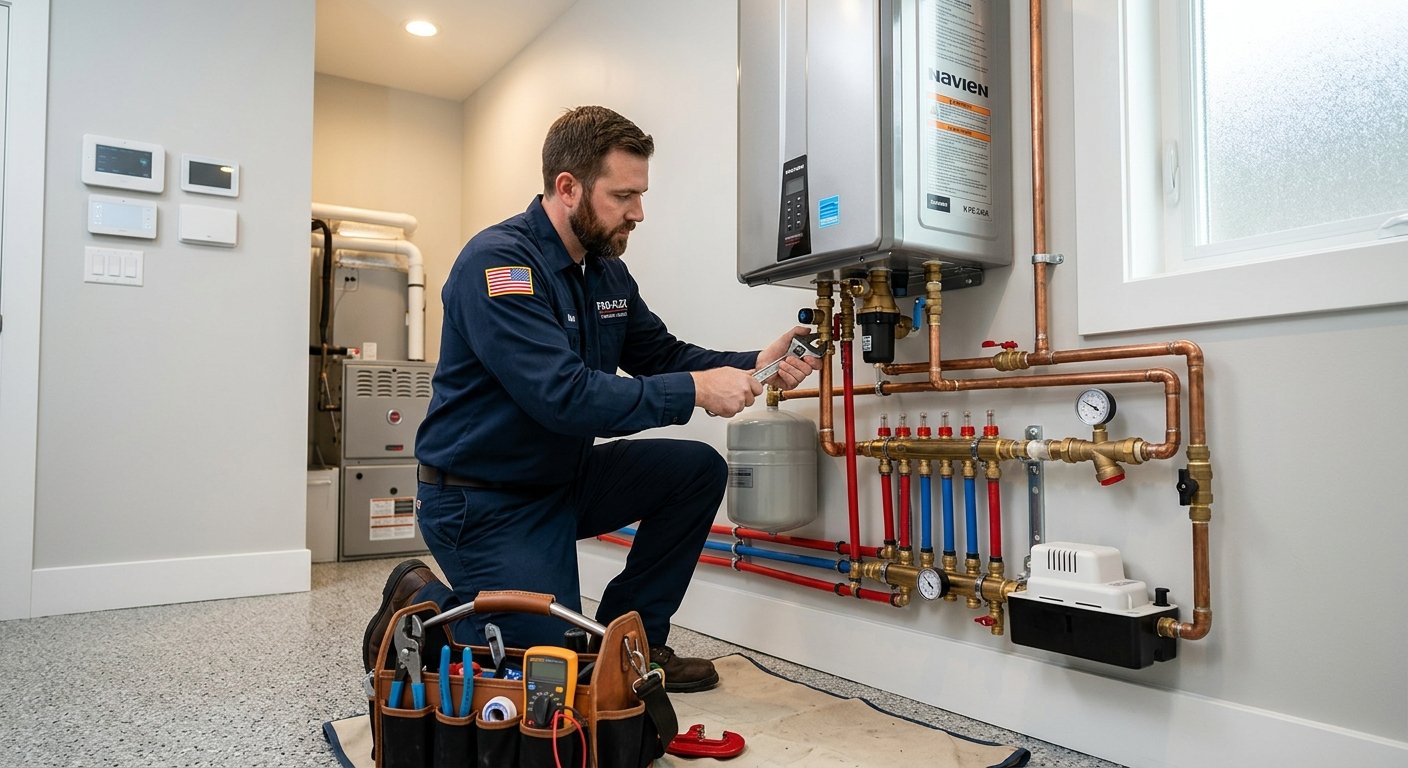
Residential vs Commercial Water Heater Replacement Cost
Commercial projects can involve different demand, equipment size, multiple fixtures, longer operating periods, multiple units or more complex access and infrastructure. That does not mean every commercial replacement is automatically expensive; it means the scope should be built around the business’s actual hot-water demand and operating conditions.
Residential projects are often simpler, but homes can still have complex tankless conversions, difficult access, utility upgrades or relocation work. The project type alone does not determine the cost.
Residential Replacement
Focus on household demand, tank vs tankless, gas/electric/heat-pump choice, access and the condition of the existing installation.
Commercial Replacement
Focus on business demand, recovery, simultaneous fixture use, multiple units, tankless flow and operational impact.
Inspection Before Replacement
If the failure is unclear, inspection can help separate repairable problems from true replacement-level conditions.
What Happens During a Water Heater Replacement?
The exact process varies by system and property, but a well-planned replacement generally follows the same logic:
- Confirm the existing system and the reason for replacement
- Verify hot-water demand and replacement capacity
- Review the installation location and access
- Check gas, electrical, venting, drainage and connection requirements
- Remove the old equipment safely
- Install and connect the replacement system
- Start, test and verify operation
- Explain any maintenance or operating differences with the new system
The timeline depends on the scope. A straightforward like-for-like replacement and a major tankless or heat-pump conversion are different projects. Access, required modifications, permits/inspection, equipment availability and unexpected installation conditions can all affect scheduling.
Questions to Ask Before Approving a Water Heater Replacement
Why does this heater need replacement?
Ask for the specific failure or condition that makes replacement stronger than repair.
How was the new size chosen?
The recommendation should connect capacity or flow to actual property demand.
What changes are required around the heater?
Ask about plumbing, gas, electrical, venting, drainage and location changes.
What is included in the total?
Make sure equipment, removal, installation, modifications and other project items are clear.
What could change the price?
Ask which conditions are known now and which conditions could expand the scope.
What maintenance will the new system need?
Replacement cost is only one part of ownership. Maintenance differs by system type.
Related Water Heater Replacement & Cost Decisions
Water Heater Replacement
The main service page for replacement planning in Brea.
Water Heater Installation
Installation planning for tank, tankless, gas, electric and other systems.
Repair vs Replacement
Compare the current failure, remaining condition and demand before deciding.
How Long Do Water Heaters Last?
Use lifespan together with condition, leaks, performance and repair history.
Water Heater Replacement Cost FAQs
There is no single reliable price without knowing the system and installation. Cost depends on heater type, capacity, fuel source, location, access, existing connections, gas or electrical requirements, venting, drainage, code/permit scope and whether the project is like-for-like or a conversion.
Quotes can include different equipment, labor, connection changes, utility work, access conditions, venting, drainage, removal, code corrections and warranty terms. Compare the scope, not only the total.
A like-for-like tank replacement is often a simpler project than a tank-to-tankless conversion because conversion can add flow sizing, gas or electrical changes, venting, condensate and mounting requirements. The exact scope depends on the property.
Common cost drivers include required flow capacity, temperature rise, gas or electrical capacity, venting, condensate, recirculation, service access and whether the property is converting from a storage tank.
Yes. Storage capacity, recovery requirements and tankless output can change equipment selection and sometimes the supporting installation.
It can. Relocation may require changes to water piping, gas or electrical service, venting, drainage and the equipment path.
Sometimes. Repair is worth considering when the storage vessel or core equipment is sound, the failure is isolated and the system still meets demand. A leaking tank vessel, broad deterioration, repeated failures or a true capacity mismatch can make replacement stronger.
No. External connections, valves or relief-related discharge may be repairable. A confirmed leak through the storage vessel itself is a different failure and usually points toward replacement.
The exact scope varies, but a clear quote should explain the equipment, removal, installation, connections, required modifications and any permit, inspection or correction work included.
That depends on the project and the proposal. Ask whether required permits, inspections and code-related corrections are included or separate.
That may be possible with some providers, but the customer should confirm compatibility, sizing, warranty implications and who is responsible if the selected equipment does not fit the property or installation.
The installed cost depends on the existing system and whether utilities need to change. A like-for-like gas or electric replacement may be simpler than converting from one fuel type to another.
Equipment, storage capacity, electrical requirements, installation space, airflow, drainage, backup heating and any conversion work can affect the scope.
Age is useful context, but condition matters more. Leaks, corrosion, repeated failures, declining output, repair history and whether the system still meets demand should be considered together.
Compare equivalent scopes, ask why replacement is recommended, understand what is included, ask what could change the price and make sure the new system is sized for the property rather than selected only by price.
The schedule depends on whether the job is a straightforward like-for-like replacement or a larger conversion, as well as access, required modifications, permits/inspection, equipment availability and unexpected installation conditions.
Programs can change over time and may depend on equipment type and eligibility. Verify current local, utility, state or federal programs before choosing equipment based on an incentive.
Commercial projects can be more complex because of demand, equipment size, multiple units, access and infrastructure, but the actual cost depends on the specific property and system rather than the label alone.
If it can be gathered safely, have the heater type, fuel source, model, approximate age, installation location, current symptom, photos of the equipment area and information about any changes in hot-water demand.
Start with diagnosis or inspection. The goal is to confirm the failure and remaining system condition before committing to replacement.
Need a Water Heater Replacement in Brea? Start With the Scope, Not a Guess.
Tell us what type of water heater you have, what failed, where it is installed and whether you are considering the same system or a change such as tankless. The most useful replacement decision starts by understanding what the property actually needs.